
Business Email Compromise: A Payment-Change Workflow That Does Not Trust Email Alone
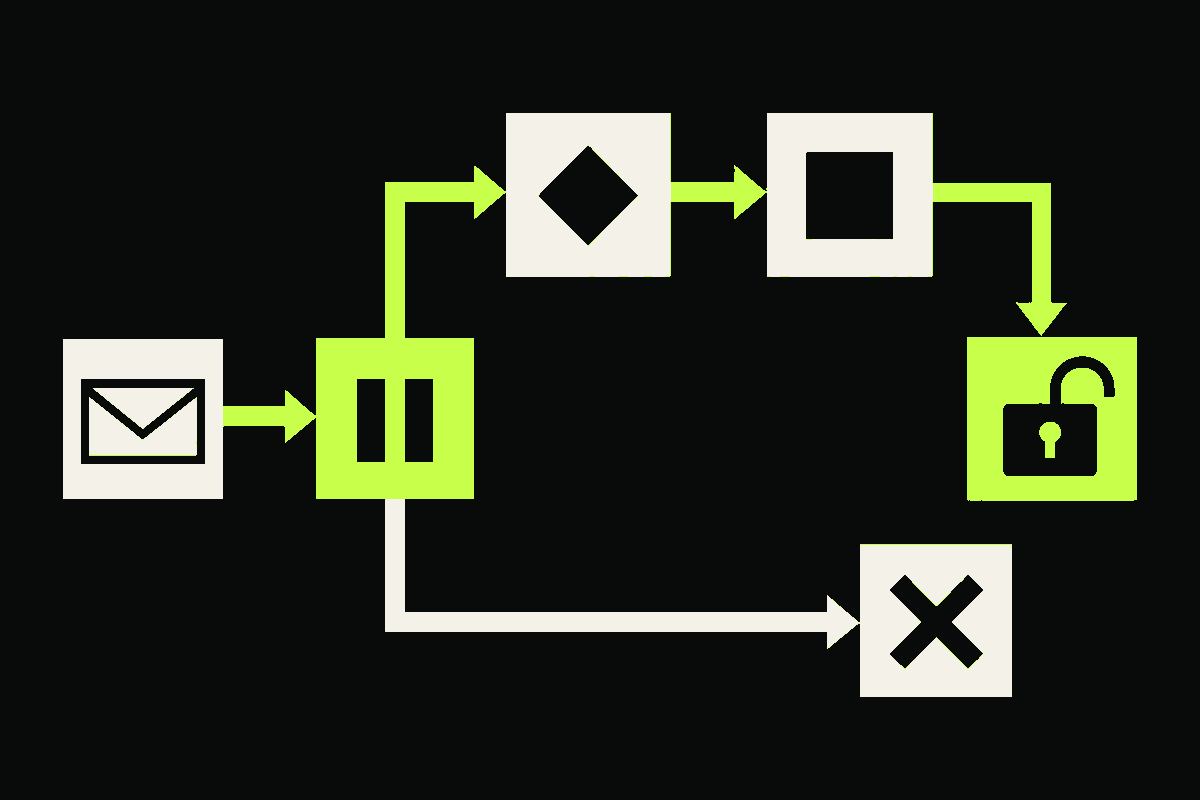
My rule for payment-change emails is simple: treat the change as untrusted until you verify it through a contact path that did not come from that email. Hold the payment, confirm the request with a known contact, require a second approval, and only then release it.
I use that rule because it is more useful than asking whether a message “looks legitimate.” Business email compromise often starts with a real business account that has been taken over. The FBI’s Internet Crime Complaint Center describes BEC as a scam that frequently uses compromised legitimate email accounts to cause unauthorized transfers.
Here is a hypothetical request:
From: Accounts <accounts@vendor.example>
Subject: Updated bank details for invoice 4831

Please use the new account below for today's payment.
Our previous account is no longer accepting transfers.
The message might arrive inside an existing thread. It might use the usual signature. SPF, DKIM, and DMARC might all pass. None of that authorizes the payment change.
The email can be authentic and the request can still be fraudulent
Email authentication answers a domain-level question. It does not prove that the person whose name appears in the message intended the request.
The current DMARC standard, RFC 9989, says this plainly: a pass validates authorized use of the author domain, but makes no value assertion about the message and does not guarantee that it is safe or desirable. A compromised vendor mailbox can therefore send a technically authentic message with fraudulent payment instructions.
This is why I would keep two decisions separate:
- Email evidence: Did the message come through an expected domain and mail path?
- Transaction authorization: Did an authorized person actually request this specific change?
Use the first decision for triage. Use the second one to decide whether money moves. If you need to inspect the email evidence, start with our guides to reading Authentication-Results headers and what DMARC does and does not stop.
The strongest fair objection is, “We already use DMARC and MFA.” Keep both. DMARC reduces exact-domain spoofing, and MFA makes account takeover harder. The control gap is different: neither mechanism is a transaction approval. A payment-change workflow has to survive a legitimate account being abused.
Put every payment change into a separate state machine
A new beneficiary, changed bank account, changed routing number, different payment country, or last-minute switch in payment method should leave the normal invoice flow. I would give that request an explicit state:
RECEIVED
   |
   v
HELD -----------------------> INCIDENT
   |                              ^
   | known-contact check          | mismatch
   v                              |
INDEPENDENTLY_CONFIRMED ----------+
   |
   | second approver
   v
SECOND_APPROVED
   |
   v
RELEASED
Received means the request exists, not that it is valid. Capture the original message ID, the person or system that received it, the vendor or payee record involved, and the exact type of change requested.
Held is the important default. Do not update the vendor master record or queue the transfer while verification is pending. Urgency is a reason to slow this path down, not a reason to skip it.
Independently confirmed means someone reached the vendor or executive through a channel already trusted before this request. Use a phone number in the vendor master record, a signed contract, an approved supplier portal, or another established contact route. Do not use the phone number, link, or reply address supplied in the change request. NIST’s phishing guidance, updated October 16, 2026, recommends verifying urgent requests with known contact information or a public company website, not information from the message itself.
Second approved means a different authorized person reviewed the original record, the requested change, and the independent confirmation. The second reviewer should be able to reject or return the request rather than merely acknowledge it.
Released means the payment system can use the verified destination. A mismatch, denial, unreachable contact, or suspicious change in the conversation should move the request to incident or leave it held. Silence is not confirmation.
Keep an audit record that explains the decision
The useful record is not “approved by finance.” It should show how the email request was separated from the authorization decision. A compact implementation can store fields like these:
request_id
payee_id
previous_destination_version
requested_change_type
source_message_id
email_authentication_summary
verification_contact_source
verification_completed_at
verification_result
first_reviewer_id
second_approver_id
final_state
Keep bank details in the system designed to protect payment data. The audit record only needs the identifiers and evidence required to reconstruct the decision. It should be possible to answer who requested the change, which trusted contact route was used, who confirmed it, who approved it, and what the system did next.
There is a product boundary worth making explicit here. Email verification can help assess whether a recipient address is formatted correctly, uses a working mail domain, or presents risk signals. It does not prove that a sender controls an inbox, authorize a payment, or establish that instructions inside a message are trustworthy.
If the payment has already left, switch to incident response
Once money has moved, the objective changes from verification to recovery and containment.
- Contact the originating bank immediately through its official website or phone number and ask about a recall or reversal. Both the FBI IC3 and the UK National Cyber Security Centre put direct bank contact near the start of the response.
- Notify your security or IT team. Preserve the original message, full headers, payment record, approval history, and relevant access logs.
- Reset or secure any affected accounts and review forwarding rules, recovery methods, active sessions, and recent sign-ins.
- Report the fraud through the appropriate national channel. In the United States, IC3 asks for a detailed complaint with the banking information required by its form. UK organizations can use the NCSC-linked reporting route.
Email evidence can help explain what happened. The release decision should still come from the independent confirmation path. If that path did not reach a known contact and a second approver, the payment change stays held.