
Shared vs Dedicated IP for Email: Choose by Traffic Shape
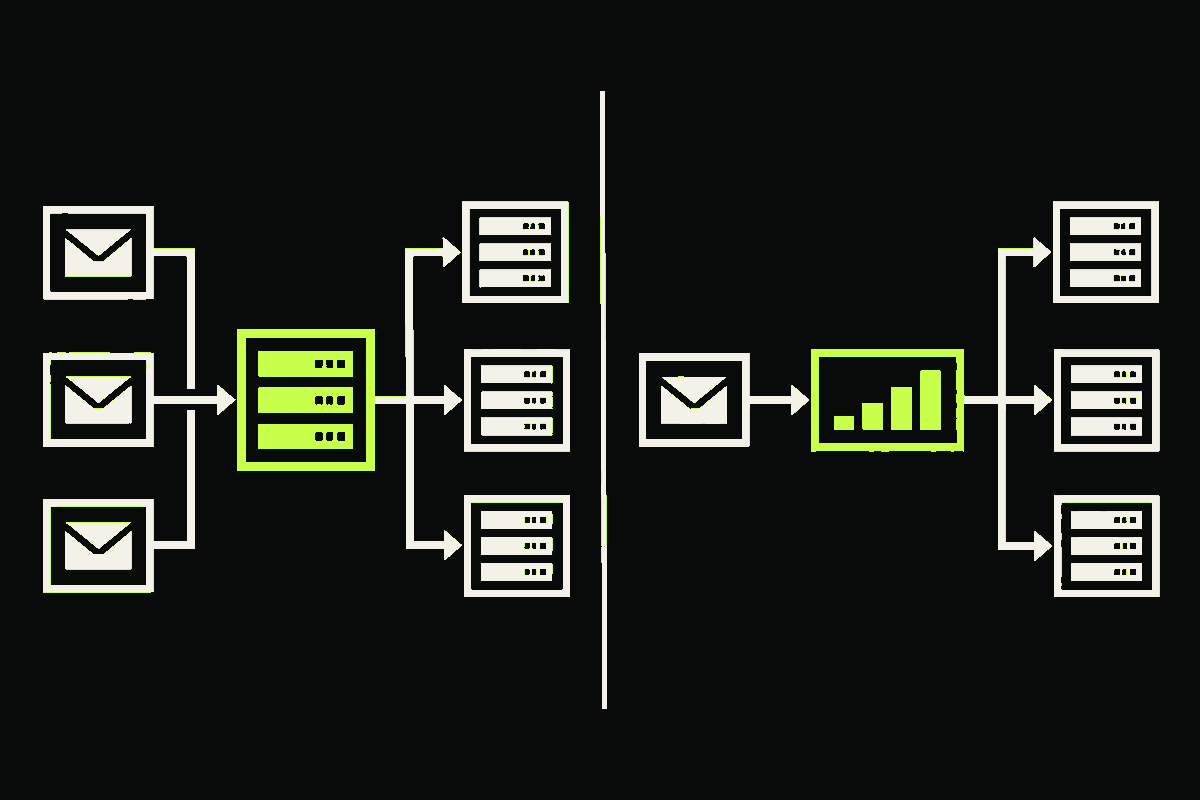
Most SaaS products should stay on a well-managed shared sending IP. Move to a dedicated IP only when you need a fixed address or reputation isolation and can sustain a consistent stream, warm the address, monitor it by mailbox provider, and own every failure.
A dedicated IP is not a deliverability upgrade. It is a transfer of responsibility. Your neighbors stop affecting the IP, but the provider's established pool also stops carrying you.
That is why I would choose from the shape of the traffic, not a single monthly-volume threshold.
A dedicated IP changes who owns the failure
On a shared pool, several senders use the same outbound IP addresses. The provider manages the pool, while each sender should still authenticate with its own domain. On a dedicated IP, one responsible entity has exclusive use of the address or pool.
The current M3AAWG Sender Best Common Practices, version 4.0, defines the environments this way and makes the tradeoff concrete: shared pools combine traffic to maintain a steadier average, while dedicated environments isolate reputation and give one entity control over volume and configuration.
| Decision | Managed shared pool | Dedicated IP |
|---|---|---|
| IP reputation | Shared with other vetted senders | Built entirely from your traffic |
| Cold start | The pool already has sending history | The new IP needs a controlled ramp |
| Traffic variation | Other senders can smooth your quiet periods | Your own peaks and silence are visible |
| Incident scope | A pool problem can affect several senders | Your mistakes stay isolated, but so does the damage |
| Operations | Provider manages IP allocation and pool health | You need warm-up, monitoring, DNS, and a recovery plan |
Neither option makes inbox placement automatic. Google says that a shared IP's activity affects every sender using it, but its sender guidance also evaluates domain reputation, authentication, complaints, volume, and sending behavior. The IP is one input, not the verdict.
Traffic shape matters more than a monthly total
A monthly count hides the evidence mailbox providers actually see. Split the stream by destination provider, message type, day, and hour.
Consider two clearly hypothetical senders that each deliver 300,000 messages in a month:
- Sender A sends password resets and receipts every hour, with a stable daily floor.
- Sender B sends one campaign near the end of the month and is almost silent otherwise.
The total is identical. The reputation opportunity is not. Sender A gives receivers a regular stream to evaluate. Sender B asks a quiet IP to produce a sudden burst.
Google's sender guidelines recommend consistent rates, gradual increases, and separate streams when infrastructure changes. M3AAWG likewise treats consistency of volume as part of IP reputation. That does not create one universal minimum. Your traffic to Gmail, Microsoft-hosted domains, Yahoo, and smaller business systems will not be distributed evenly.
Provider thresholds are also provider-specific. For example, Amazon SES recommends shared IPs for low or irregular volume and dedicated options for sustained, predictable sending. That is useful implementation guidance for SES, not a law for every platform.
Fill in this worksheet before you switch
I would not approve a migration from a monthly total alone. Write down these six facts from real delivery logs:
- Daily floor and peak: the quietest normal day, the busiest normal day, and the largest expected event.
- Destination mix: how much traffic reaches each major mailbox-provider network, not just recipient domains.
- Longest quiet period: the number of days the IP may send little or nothing.
- Stream boundaries: which transactional, security, lifecycle, and marketing messages must not share failure impact.
- Fixed-IP requirement: whether business recipients must allowlist a known source address.
- Named operator: who will watch deferrals, permanent failures, complaints, blocklists, and authentication after launch.
Choose a dedicated IP when the fixed-address or isolation requirement is real, the traffic is regular enough to establish history, and the operator exists. Choose a managed shared pool when traffic is small, bursty, new, or unattended.
If the only reason is “shared sounds less professional,” stay shared. The label says nothing about the quality of the pool.
What about a bad neighbor on the shared pool?
This is the strongest fair objection. Another sender can hurt the reputation of a shared IP. Google states that directly in its guidance.
The answer is not to pretend the risk disappears. Evaluate how the provider vets senders, separates traffic, responds to abuse, rotates or removes damaged addresses, and exposes delivery evidence. Keep your own DKIM signing domain and DMARC alignment so receivers can distinguish your domain history from the pool's IP history. The M3AAWG guidance specifically recommends unique DKIM domains or subdomains for entities sharing an environment.
A dedicated IP removes neighbor risk but concentrates your own risk. One compromised account, imported list, or campaign mistake now owns the whole address. If you cannot detect and stop that event quickly, isolation is not the same as safety.
A safe migration needs an exit ramp
Treat the change as a reversible infrastructure migration, not a billing-plan toggle.
- Preserve domain identity. Keep the visible From domain, DKIM domain, return path, and tracking domains stable where possible. A simultaneous domain change makes the evidence harder to interpret.
- Verify the new IP's identity. Configure matching forward and reverse DNS and a resolvable EHLO name. The reverse DNS guide shows the expected forward-confirmed pattern.
- Start with wanted, predictable mail. Move a controlled slice of engaged traffic first. Follow a real warm-up process instead of generating fake engagement.
- Compare by destination. Watch 4xx deferrals, 5xx rejections, complaints, and authentication for each mailbox-provider network. Google's Postmaster Tools dashboards separate IP reputation, domain reputation, spam rate, and delivery errors when enough data is available.
- Define the abort signal before launch. Pause or roll traffic back when deferrals or complaints rise beyond your normal range. Do not keep increasing volume merely to finish a calendar.
Segregating transactional and marketing traffic may justify separate streams, but separate subdomains and DKIM identities still matter. The email subdomain strategy guide owns that design decision.
The IP cannot repair a bad recipient stream
A new IP does not fix unwanted mail, stale lists, broken authentication, or a sudden change in content and volume. It gives those problems a new address.
Email verification can reduce obvious syntax, routing, disposable-provider, and recipient failures before a send. It cannot create consent, prove inbox ownership, guarantee delivery, or manufacture a good sender reputation. Keep inconclusive results unknown and apply the verification result in your own risk policy.
My default remains simple: use a managed shared pool until you can explain the dedicated IP's job in operational terms. “We need this fixed address for allowlisting” is a job. “We need to isolate a mature, steady stream and we have an operator and rollback plan” is a job. “Dedicated sounds better” is not.