
Email Warm-Up: Ramp Sending Without a Fake Daily Schedule
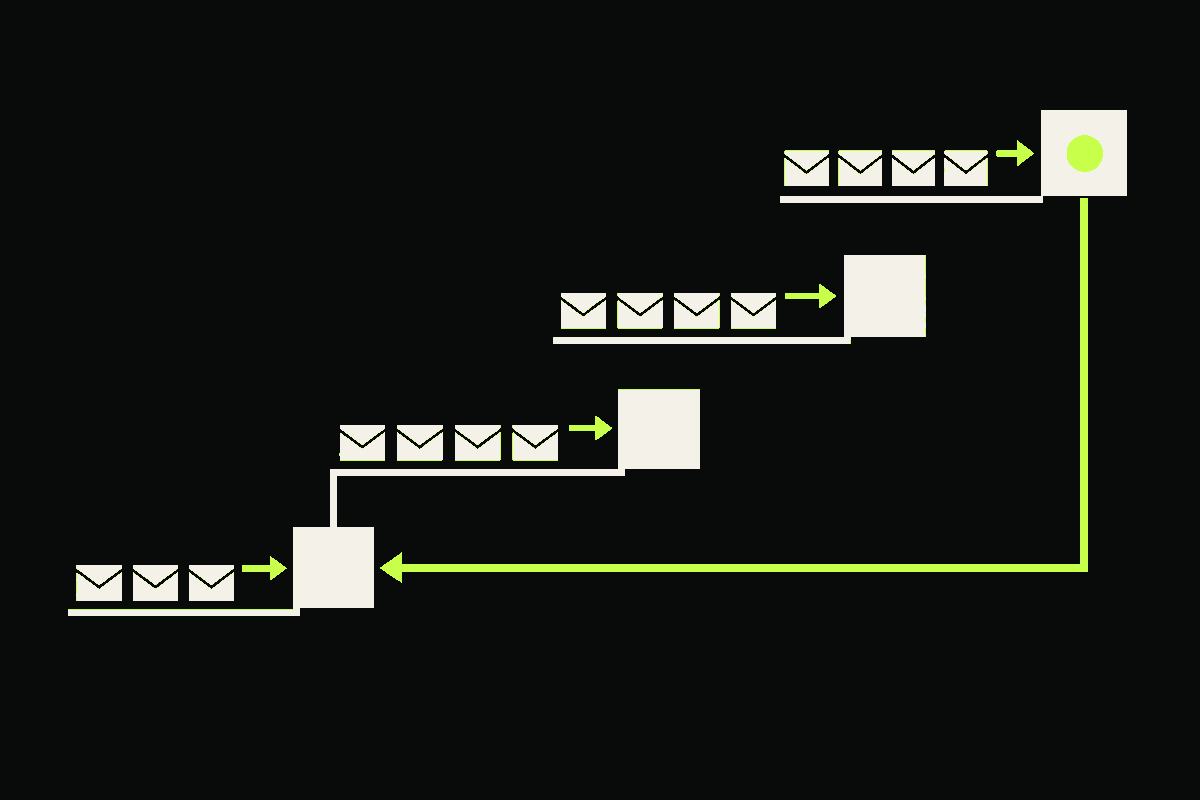
Warm up a new email domain or IP by increasing legitimate volume in controlled steps, watching receiver evidence after each step, and cutting back when deferrals, complaints, or reputation worsen. A fixed day-by-day chart cannot make that decision for you. The next step depends on your existing history, audience quality, recipient mix, and the response from each mailbox provider.
M3AAWG's sender guidance published on August 27, 2026 calls six weeks an average for domain warm-up, not a guaranteed finish line. Google's current sender guidelines make the same principle operational: start with low volume to engaged users, increase slowly, avoid bursts, and reduce volume when bounces or deferrals rise.
Warm-up is a change-management problem
Email warm-up introduces a receiving network to a sending identity and its normal behavior. It is useful when you start using a new domain, subdomain, or dedicated IP, move to a different sending provider, or materially change the headers and format of a bulk stream. M3AAWG's 2026 Sender Best Common Practices recommends warming a new subdomain even when the organizational domain already has history.
The identity is a combination, not one DNS record. Receivers can evaluate the visible From domain, DKIM signing domain, envelope domain, connecting IP, message category, and recipient response. Changing several of those at once creates another unknown combination. The email subdomain strategy guide explains how to keep transactional and marketing streams under recognizable, separately operated identities.
Warm-up cannot create consent, erase a bad list, or persuade a recipient to want a message. Artificial conversations, fake opens, and mail sent only to generate history substitute activity for a real audience. M3AAWG explicitly advises against artificial warming. I would rather send a smaller stream of expected mail than manufacture a larger stream that teaches receivers nothing useful about the program.
Freeze the identity before you increase volume
Choose the production identity first. Keep the visible From domain, DKIM d= domain, Return-Path domain, sending IP or IP pool, and message purpose stable through the ramp. If the provider uses shared IPs, you may not control the IP warm-up directly, but the domain and stream still need consistent behavior. If you use a dedicated IP, both the IP and domain begin accumulating evidence.
Complete the boring work before the first increase: SPF and DKIM authentication, DMARC alignment, valid reverse DNS for a dedicated IP, working unsubscribe, complaint intake, bounce processing, and a suppression list. Authentication is a prerequisite, not an inbox guarantee. The guide to mail going to spam after SPF, DKIM, and DMARC pass separates those two jobs.
Start with recipients who recently asked for and interacted with this type of mail. That is not permission to redefine an old audience as “engaged” because an address once opened something. The subscription source, message purpose, and most recent meaningful activity should agree.
The warm-up loop has five states
- Preflight. Send a small production-shaped sample through the exact domain, headers, links, and infrastructure you plan to use. Confirm authentication results, unsubscribe behavior, bounce routing, and complaint identifiers. A seed inbox can expose a configuration mistake, but it cannot stand in for recipient behavior.
- Baseline. Send at a low, steady rate to the strongest permission-based segment. Spread the traffic through the day instead of releasing one burst. Record results by receiving network, because a healthy aggregate can hide one provider that is deferring most of its traffic.
- Advance. Increase one variable: volume. Keep identity, message category, and audience rules stable. Google's email sender guidelines say the larger your target volume, the more slowly you should increase, and that daily sending can support a faster increase than intermittent weekly bursts. They do not publish a universal daily multiplier.
- Hold or roll back. If a receiving network starts deferring mail, complaints rise, or reputation worsens, stop increasing. Reduce the affected stream until the SMTP error rate settles, then investigate before advancing again. A
4xxreply is temporary evidence that should be retried by the mail system, not a mailbox verdict. RFC 5321 distinguishes those transient replies from5xxfailures that should not be repeated unchanged. - Re-enter. Resume from a lower proven level after the cause is understood. Treat a provider migration, IP move, header redesign, or material template change as a new segment of traffic instead of assuming the old ramp covers it. Google specifically recommends increasing modified infrastructure or header segments separately.
This loop is the schedule. Time matters because receivers need repeated observations, but elapsed days do not override bad evidence. A clean week at a small volume supports the next controlled increase. A calendar date does not.
What should pause a warm-up?
Deferrals cluster at one receiving network
Group SMTP replies by the receiving MX network, sending IP, and message stream. A sudden rise in 4xx replies can mean rate limiting, congestion, or a reputation control. Hold or reduce that provider's traffic while the sending system follows its normal retry policy. The hard-bounce and soft-bounce guide explains why the reply text and enhanced code matter more than a generic bounce label.
Complaints or reputation move the wrong way
Receiver dashboards, feedback loops, and SMTP responses are stronger warm-up signals than a blended campaign open rate. Google's Postmaster Tools reports spam rate plus domain and IP reputation, while Gmail says it does not track opens and cannot verify third-party open-rate accuracy. The feedback-loop guide shows why an identifiable complaint and an aggregate complaint require different actions.
A complaint spike calls for an audience and content investigation, not merely a slower throttle. Confirm how recipients subscribed, whether the current message matches that promise, and whether unsubscribe works. Suppress recipients when the evidence identifies them, and stop the affected campaign when it does not. Slowing unwanted mail does not make it wanted.
Permanent failures expose a list-quality problem
A ramp is not a safe test for whether a list is old. Rising permanent recipient failures should stop the expansion while you isolate the source, remove confirmed failures, and fix the collection or retention process. The suppression-list model keeps those events scoped without deleting the contact history that explains them.
The identity changed during the ramp
Switching domains, IP pools, Return-Path, DKIM signer, provider, or message category changes the evidence receivers see. Keep the previous stream separate and introduce the modified stream at a controlled level. A successful warm-up for receipts does not automatically cover a new promotional program.
The strongest fair objection is practical: teams need a forecast, and “watch the signals” sounds too vague for capacity planning. Use a provisional calendar for staffing and campaign slots, but make every increase conditional. Write down the current level, the proposed next level, the minimum observation window, the signals that permit advancement, and the signals that force a hold. The forecast stays useful without pretending that receivers owe you the next step.
When is email warm-up finished?
Warm-up is finished when the intended production volume has remained stable through several normal sending cycles, the main receiving networks are accepting the stream without a growing deferral pattern, complaint and permanent-failure signals remain within your operating limits, and the identity is no longer changing underneath the test. Monitoring continues after that point. Reputation is ongoing behavior, not a certificate earned on day 30.
Pre-send email verification can remove malformed addresses, dead domains, and clear mailbox failures before they add avoidable noise to a ramp. It cannot establish consent, build sender reputation, prove inbox placement, or guarantee delivery. Keep verification in the list-quality layer, complaint and bounce handling in the feedback layer, and the ramp decision in the sending-control layer.
Once the stream is stable at its real operating level, retire the temporary ramp limits and keep the same provider-level monitoring. If volume or identity changes materially later, return to the loop at the smallest state that lets you observe the change safely.