
Email Blocklists: How to Diagnose a Listing and Recover
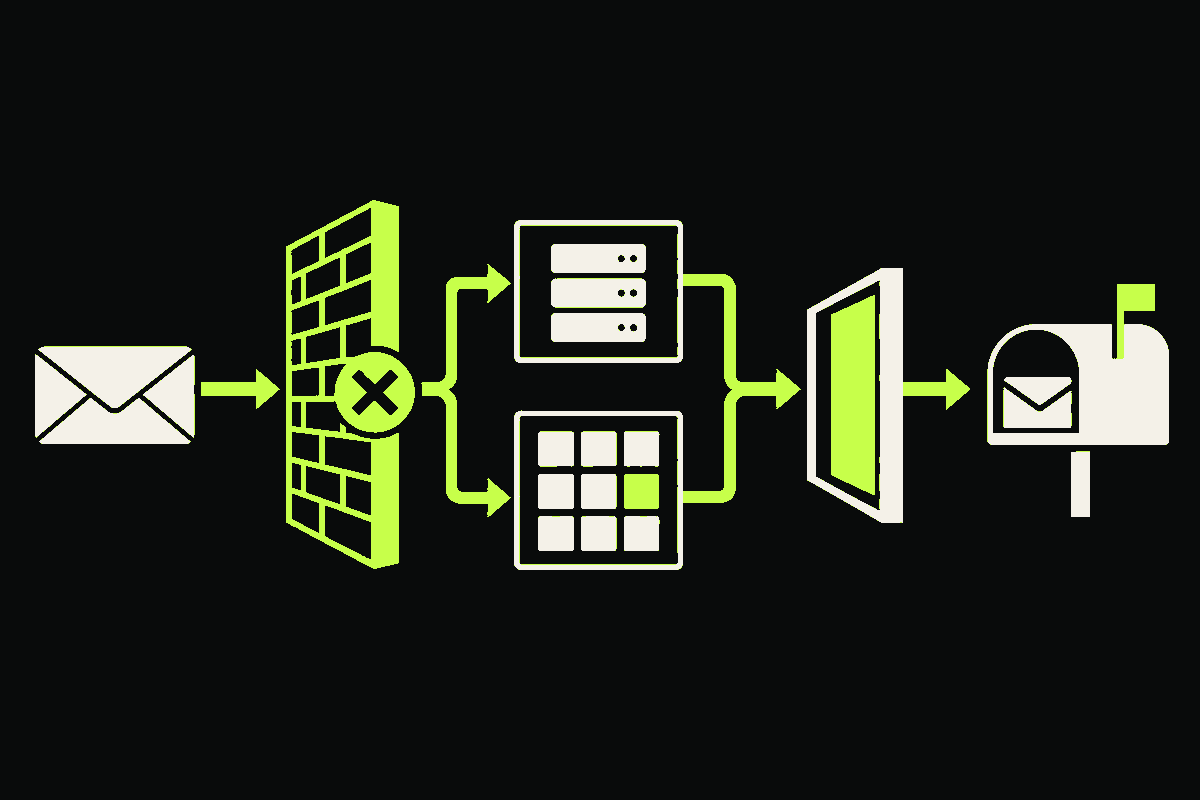
A delivery failure does not automatically mean your email is on a blocklist. A receiver can reject mail because of its own reputation model, rate limits, authentication rules, content policy, or a public blocklist. You have a confirmed listing only when you identify the exact sending IP or domain, the exact list, and a current record from that list's operator.
When someone tells me “we've been blacklisted,” I ask for the SMTP refusal before I ask for a removal form. That one artifact usually separates a real listing from several problems that need different fixes.
Start with the refusal, not a blocklist checker
Here is a hypothetical rejection using the documentation address and domain from RFC 5782:
550 5.7.1 Service unavailable;
Client host [192.0.2.99] blocked using bad.example.com
This refusal gives you three useful facts:
550 5.7.1says the receiver stopped this delivery for a permanent policy reason.192.0.2.99identifies the connecting SMTP client in this example.bad.example.comnames the list the receiver says it used.
The wording is more valuable than a generic “email blacklist” alert. Preserve the complete response, recipient domain, UTC timestamp, message ID, sending provider, and connecting IP. If the rejection includes a URL or incident code, keep those too.
A 5.7.1 alone does not prove a public listing. The same enhanced status can describe many security and policy refusals. The hard-bounce and soft-bounce guide explains why the cause matters more than the first status digit when deciding what to suppress.
Prove which sending identity is affected
Email exposes several identities during one delivery. A blocklist may contain an IP address, a domain, or another indicator. It is rarely a verdict on the mailbox written in the visible From field.
For the failed message, record these identities separately:
- Connecting IP: the address that opened the SMTP connection to the receiver.
- Envelope domain: the domain used in
MAIL FROM, later visible inReturn-Pathafter delivery. - DKIM signing domain: the
d=value in the DKIM signature. - Visible From domain: the identity the recipient sees.
The From, Reply-To, and Return-Path guide covers why these addresses can differ. For a rejection that names “Client host,” start with the connecting IP. For a domain-listing notice, inspect the exact domain the notice identifies instead of checking every domain in the message and treating any match as causal.
Shared infrastructure changes ownership of the incident. Google's email sender guidelines state that activity from any sender on a shared IP affects the reputation of everyone using that IP. If an email service provider owns the listed address, give its abuse or deliverability team the refusal, UTC time, recipient domain, and message ID. They control the IP and the removal request.
Confirm the exact list at its source
A DNS blocklist is a DNS zone. For IPv4, the client reverses the address octets and appends the list's zone. A returned A record means the queried address has an entry; an optional TXT record can explain the reason. RFC 5782 uses this illustrative lookup:
99.2.0.192.bad.example.com  A    127.0.0.2
99.2.0.192.bad.example.com  TXT  "Dynamic address..."
The 127.0.0.2 value is a list response code, not another server to contact. Combined lists can use several loopback values for different sublists, so interpret the answer using that operator's documentation.
For a real incident, use the named operator's official lookup and removal page. An aggregation site can help you discover possibilities, but it cannot replace the current record, reason, policy, or removal instructions from the list that allegedly caused the refusal.
I save a small evidence record before making any change:
- the IP address or domain checked;
- the list and sublist name;
- the operator's current result and reason;
- the lookup time in UTC;
- the refusal that connects the listing to an actual delivery.
This prevents a common mistake: finding an unrelated listing after a receiver rejection and assuming it caused the rejection. Receivers choose which lists to use and whether a match rejects, scores, or merely annotates a message. RFC 5782 describes both direct blocking and scoring use.
Four evidence states lead to four different actions
The refusal names a list, and the operator shows the same asset listed now. Treat that as a confirmed listing incident. Read the entry reason and policy before changing infrastructure or requesting removal.
The refusal names a list, but the operator no longer shows the asset. Save both timestamps. A receiving network may still have stale data after a recent removal. Spamhaus's current operator guidance says some networks take longer to synchronize and advises separating a problem seen across many networks from one confined to one or two receivers.
The refusal names no external list. Work the receiver's own error documentation and sender dashboard. Gmail, for example, exposes domain and IP reputation in Postmaster Tools and documents direct reputation-based refusals. A clean result from a public checker does not override a receiver's private policy.
The server accepts the message, but it lands in spam. That is an inbox-placement problem, not proof of a listing. Authentication, reputation, complaints, engagement, content, and receiver policy can still matter. The guide to mail going to spam even when authentication passes owns that diagnosis.
Fix the cause before asking for removal
A removal request is the last step in remediation, not the first. Pause the affected traffic or isolate it to a controlled stream while you find the event that produced the listing.
Work backward from the listed identity and the operator's reason. For an IP listing, examine outbound volume, queue growth, authentication failures, recipient sources, complaint events, and the tenants or credentials that used that IP. For a domain listing, inspect the exact domain's mail, links, DNS changes, compromised accounts, and any third party authorized to send or redirect traffic through it.
Then remove the cause. That might mean rotating stolen credentials, closing an exposed relay, suspending an abusive tenant, restoring consent boundaries, or stopping a stale import. Keep the evidence and the repair time. The feedback-loop guide shows how complaint evidence differs across providers, while the suppression-list model explains how to stop repeat sends without deleting the underlying contact history.
The same Spamhaus removal guidance asks a requester to explain what caused the issue, what fixed it, when it was fixed, and what will prevent a recurrence. That is a useful incident record even when another operator owns the list. A vague “we don't send spam” response does not show that the source has stopped.
The strongest fair objection is that a false positive should be removed immediately. Yes, challenge an incorrect entry with the operator's evidence process. Still preserve logs and confirm the asset first. Otherwise you can spend hours appealing the wrong IP while the receiver is rejecting a different shared address or applying a private rule.
Recovery ends when delivery evidence changes
After the operator confirms removal, allow time for DNS and receiving systems to refresh. Restore volume gradually enough that you can see whether the original failure returns. Watch the same evidence that opened the incident: SMTP responses by recipient domain, the actual connecting IPs, complaint signals, queue behavior, and the operator's current lookup.
Pre-send email verification can reduce malformed addresses, dead domains, and clear mailbox failures before they become wasted deliveries. It cannot create consent, repair sender reputation, remove an IP from a list, or guarantee inbox placement. Keep verification in the signup and list-quality layer, and keep blocklist remediation in the sending-infrastructure incident process.
A blocklist incident is closed when the listed asset is clear, the cause is fixed, the receiver stops returning the original refusal, and normal traffic can resume without the same complaint or abuse pattern. Anything less is only a cleaner dashboard.